

Imagine stepping into a space that feels both fresh and familiar. It’s where the beauty of the outdoors meets the heart of your home. That’s the magic of a green kitchen.
This design approach creates an eco-friendly kitchen that works with nature. You get a room that’s not only beautiful but also thoughtful about its impact.
Choosing sustainable kitchen design means making choices that are good for your family and the planet. It’s about creating a space that feels alive, healthy, and truly yours.
Key Takeaways
- Green kitchens blend natural beauty with functional home spaces
- Eco-friendly designs reduce environmental impact
- Sustainable choices benefit both your family and the planet
- These kitchens create healthier, more vibrant living environments
- Thoughtful design combines aesthetics with environmental responsibility
- Natural elements can transform your cooking space into a refreshing retreat
Why Choose a Green Kitchen for Your Home
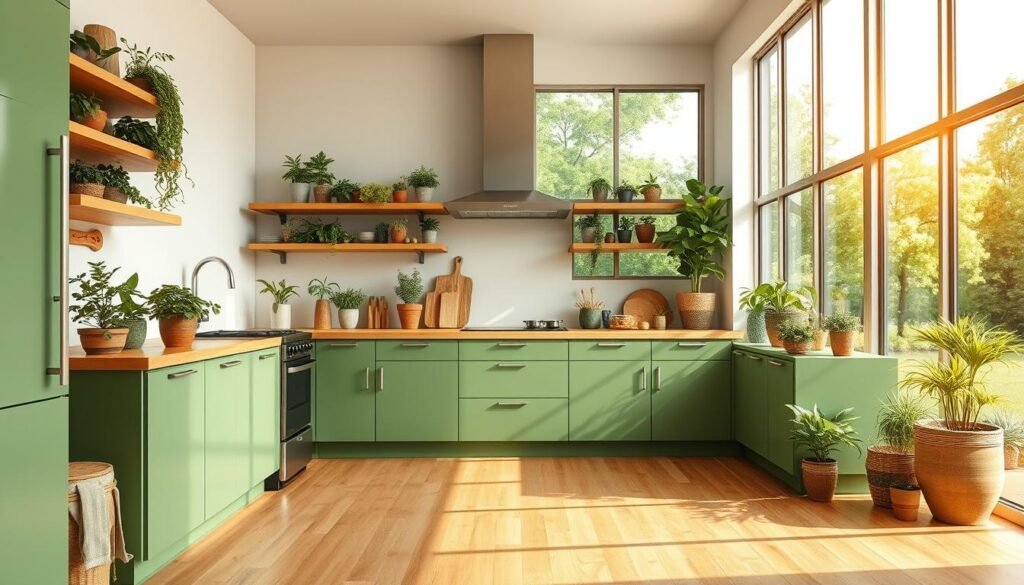
Imagine walking into a kitchen that’s not just pretty but also good for you and the planet. Green kitchens do more than look good. They make your home healthier and cut down on harm to the environment.
Health and Environmental Advantages
Old kitchens often have chemicals that can make the air inside unhealthy. Choosing safe cabinets, countertops, and finishes makes your home safer for your family.
These choices also cut down on bad air in your home. You’ll feel better knowing your kitchen isn’t making the air toxic.
Your green choices don’t just help your home. They also help the planet. Sustainable materials come from places that care for forests and reduce waste. Every green choice helps keep our planet healthy for the future.
Long-Term Cost Savings
Green kitchen upgrades might cost more upfront, but they save you money in the long run. Energy-saving appliances use less power, which means lower bills every month.
Appliances with the ENERGY STAR label use even less power than usual ones. These savings add up over time, making the initial cost worth it.
Water-saving fixtures are another way to save money. Low-flow faucets and dishwashers use less water but still work well. You’ll see the savings on your water bill every month.
Green kitchens are smart investments that save you money and help the planet. They add value that goes beyond just looks.
Essential Elements of a Sustainable Kitchen
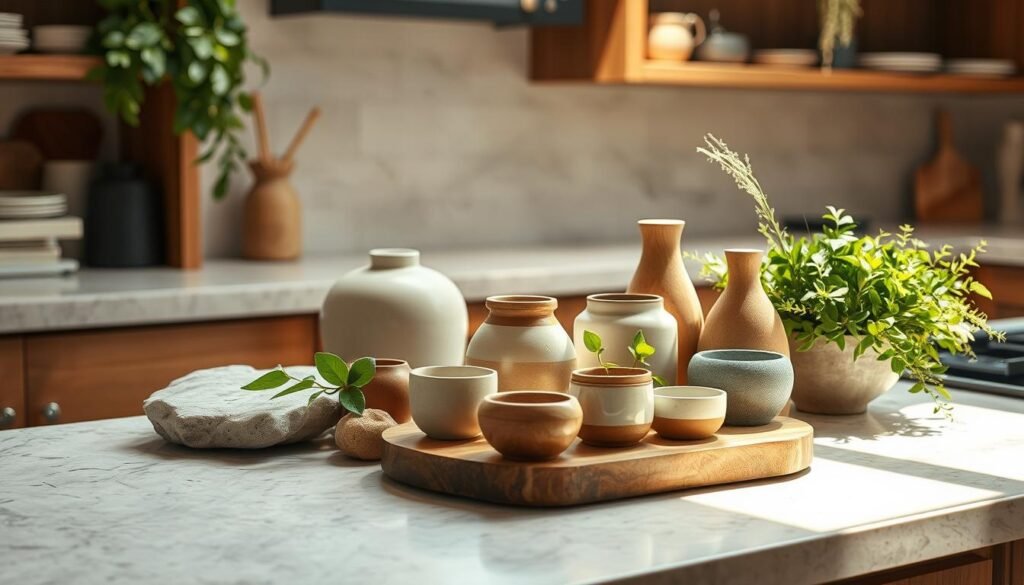
Starting an eco-friendly kitchen means picking the right base. Countertops and flooring are key. They help lessen your environmental footprint and make your kitchen look great.
Countertop Options Like Bamboo or Recycled Glass
Bamboo countertops are a green choice compared to wood. They grow fast and can be harvested without harming trees. This makes them a top pick for organic kitchen materials.
Recycled glass countertops turn old glass into something new and useful. They mix crushed glass with other materials to create strong surfaces. Each one has its own story of saving the planet.
Cork flooring is made from tree bark that grows back quickly. It’s soft to walk on and keeps your kitchen warm or cool. This saves energy all year.
Reclaimed wood floors give old wood a new life. Each piece has its own history. It’s a way to have beautiful floors without harming forests.
Maximizing Natural Light and Ventilation
Placing windows right can let sunlight into your kitchen. This cuts down on the need for artificial light during the day. The right placement can save a lot of energy.
Designs that let air flow through naturally are great. Open windows on opposite sides create cool breezes. This means you use less air conditioning.
Skylights or solar tubes are perfect for kitchens without many windows. They bring light from above, making your kitchen feel closer to the outdoors.
Top Eco-Friendly Appliances for Your Kitchen
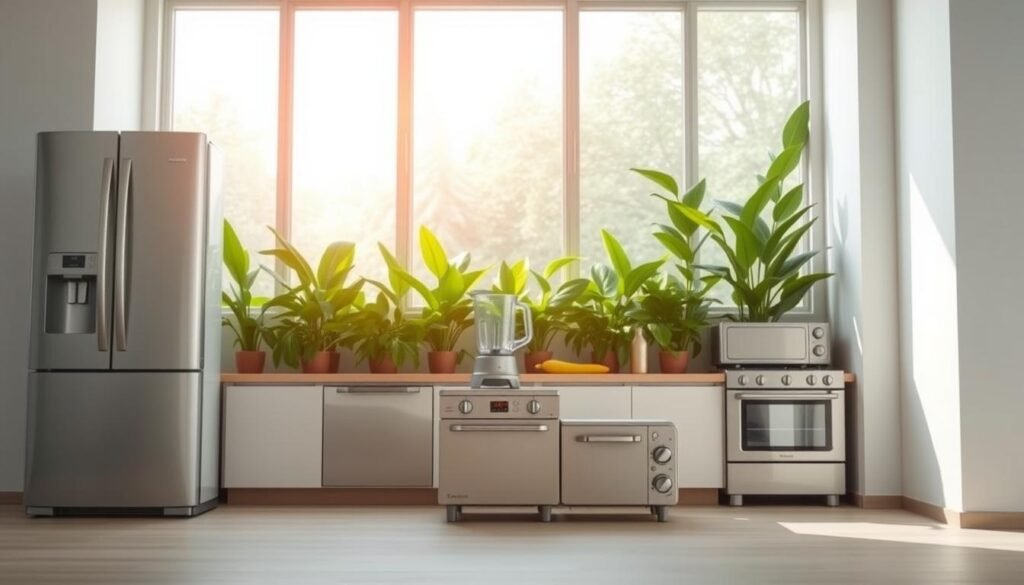
Choosing the right appliances is key to an energy-efficient kitchen. These smart choices save you money and help the planet.
Today’s appliances come with amazing features. They work efficiently to deliver top-notch performance.
When looking for eco-friendly appliances, watch for ENERGY STAR certification. It shows they’re energy-efficient.
Induction cooktops heat up faster than old models. They use electromagnetic energy to cook food directly.
Refrigerators with advanced insulation keep temperatures steady. This cuts down on the compressor’s work.
Convection ovens cook food evenly by circulating hot air. They often cook faster at lower temperatures.
How They Reduce Energy Consumption
These features cut down energy use. Induction cooktops only heat the cookware, not the air around it.
This targeted heating means less energy waste. Your kitchen stays cooler while cooking.
Well-insulated refrigerators run less often. They keep cold temperatures without using a lot of power.
Convection ovens cook faster and at lower temperatures. This saves energy and money on your bills.
Smart sensors in modern dishwashers use water wisely. They adjust cycles based on how dirty your dishes are.
Water-Saving Fixtures and Gadgets
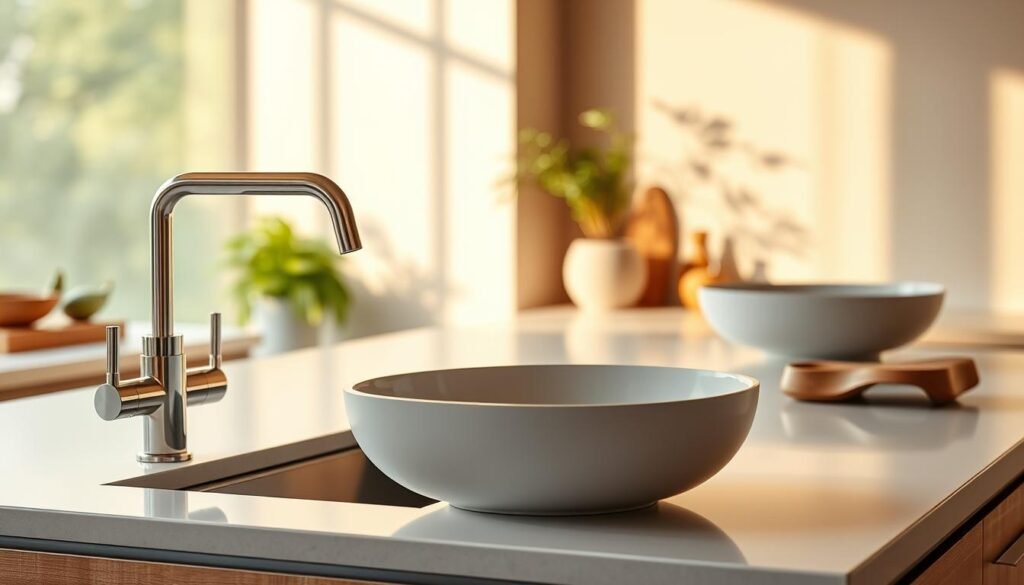
Your green kitchen journey isn’t complete without thinking about water conservation. Simple upgrades to your fixtures can make a big difference. They help both the environment and your wallet.
Modern water-efficient faucets use advanced technology. They clean as well as old faucets but use less water.
Aerators are cheap attachments that mix air with water. They keep pressure up while cutting water use by up to 50%.
Installing water-saving devices is easy. Most aerators just screw onto your faucets without needing special tools.
For dishwasher upgrades, look for the ENERGY STAR label. These models use advanced sensor technology to save water.
These upgrades save a lot of water. Efficient faucets use 1.5 gallons per minute, down from 2.2 gallons.
Low-flow aerators can cut your kitchen water use by 30% or more. That means saving hundreds of gallons a year for most families.
Types of Composters and How to Use Them
Composting turns kitchen scraps into soil. It’s a natural recycling process you can do at home.
Countertop compost bins are great for collecting food waste. They have filters that stop bad smells.
Tumbler composters hold more and make turning the compost easy. Their design helps with aeration.
Starting composting is easy. Start with fruit and veggie scraps, coffee grounds, and eggshells.
Don’t add meat, dairy, or oily foods to avoid bad smells. Mix green materials with brown ones like dried leaves for best results.
In a few months, you’ll have rich compost ready for your garden or plants. This natural fertilizer completes your kitchen’s sustainability cycle.
Organic and Non-Toxic Finishes

Natural finishes protect your cabinets and walls without harmful chemicals. They make your kitchen healthier and reduce environmental impact.
Recommended Products for Walls and Cabinets
For kitchen walls, choose paints with low-VOC or zero-VOC formulations. These water-based paints cover well without bad fumes.
Wood cabinets do great with natural oil finishes. They go deep into the wood, making it look beautiful and protecting it from moisture and wear.
Milk paint is also a top pick for walls and cabinets. It’s made from natural stuff and gives a nice matte look that’s perfect for green kitchens.
Options for Durability and Safety
Many natural finishes are very durable, just like regular products. Look for ones made for busy places like kitchens.
When it comes to safety, pick finishes that are certified. This ensures they’re safe for your family.
Applying these finishes right is key to their lasting power. Follow the instructions for prep and drying to get the best look.
Incorporating Plants into Your Kitchen Design

Adding plants to your kitchen makes it more lively. They bring in fresh energy and natural beauty. Plus, they purify the air and make your space feel calm.
It’s important to pick the right plants for your kitchen. Look for ones that do well in bright light and a bit of humidity. This helps them grow strong and healthy.
Start with herbs that you can use in cooking. Basil, mint, and rosemary are great choices. They grow fast and smell amazing.
Put them near a sunny window for the best results. Water them when the soil feels dry. Also, picking leaves regularly helps them grow more.
For easy-to-care-for plants, think about snake plants. They handle low light and don’t need much water. These plants clean the air and add beauty to your kitchen.
DIY Ideas and Maintenance
Make your own vertical garden with simple items. Use wooden pallets or hanging shoe organizers. This saves space and adds green touches.
Try making hanging planters from mason jars or tin cans. Add rope for a rustic look. These projects add personality to your kitchen.
Keep your plants healthy by checking them weekly. Remove dead leaves and clean off dust. Also, rotate pots to help them grow evenly.
Feed your plants with organic fertilizer every few months. Group plants with similar water needs together. This makes caring for them easier and keeps them thriving.
Smart Storage Solutions with Sustainable Materials
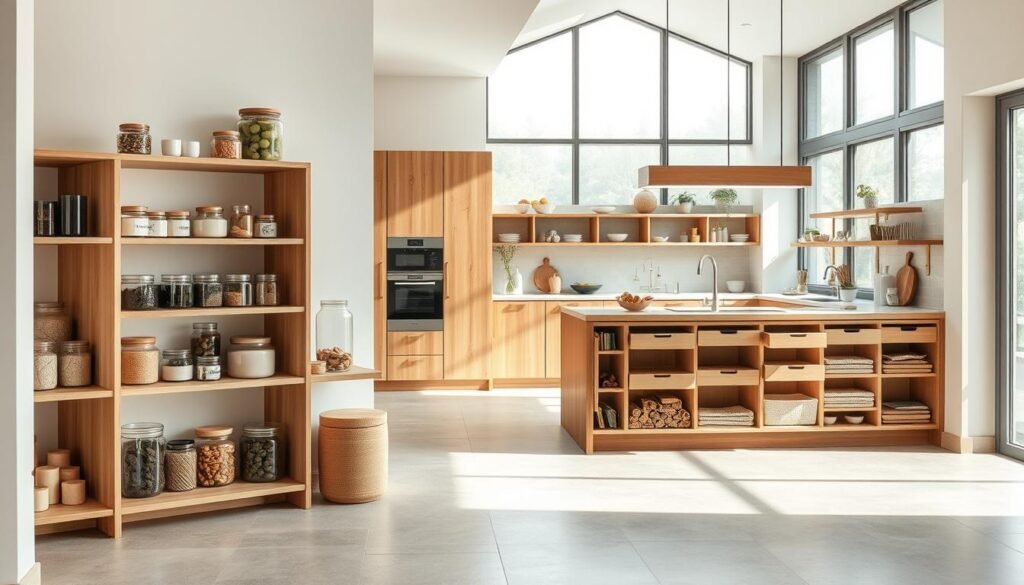
Your green kitchen needs storage that fits your eco-friendly values. Using smart, sustainable materials makes your kitchen both functional and eco-friendly.
Opt for storage made from bamboo, recycled metal, or reclaimed wood. These materials are durable and support your green lifestyle.
Bamboo pull-out drawers offer easy access to deep cabinets. They let you see everything, helping you avoid food waste.
Tiered shelving units use vertical space in pantries and cabinets. They help you make the most of every inch, keeping things visible and easy to reach.
Glass jars provide airtight storage for dry goods and bulk items. They keep food fresh and cut down on packaging waste.
Clear containers are great for pantry organization. They let you see what you have, helping you avoid buying too much.
Customizable Options for Efficiency
Modular systems can change with your storage needs. You can rearrange them as your kitchen evolves, making your storage last longer.
Adjustable shelving lets you customize the space between shelves. This flexibility means you can fit different sizes without wasting space.
Many sustainable storage systems have interchangeable parts. You can mix and match to find the perfect setup for your kitchen.
Look for systems that grow with your family. Being able to add modules later means your investment will keep serving you well.
These smart solutions blend function with eco-friendliness. They help you keep a tidy, efficient kitchen that matches your green living goals.
Lighting Ideas for an Eco-Conscious Kitchen

Choosing the right lighting can make your kitchen both energy-efficient and beautiful. Good lighting not only saves money but also helps the planet. Let’s look at smart ways to brighten your kitchen while being eco-friendly.
LED bulbs are a great choice for saving energy. They use up to 75% less electricity than old bulbs. This means lower bills and a smaller carbon footprint.
Install LED bulbs in all your fixtures. They last years longer, so you change them less often. For task lighting under cabinets, choose slim LED strips. They provide bright light for cooking and prep work.
Consider dimmer switches to control light levels. You use only the light you need. Motion sensors can also help. Lights turn on when you enter and off when you leave.
Benefits and Considerations
Smart lighting systems offer great benefits. You control lights from your phone or with voice commands. Set schedules to match your daily routine. This prevents lights from staying on when not needed.
Think about color temperature when selecting bulbs. Warm white (2700K-3000K) creates a cozy, inviting atmosphere. Cool white (3500K-4100K) is better for task areas where you need focus.
Natural light is another eco-friendly option. Maximize windows and consider skylights. They reduce the need for artificial light during the day. Choose light-colored walls and surfaces to reflect more light.
Always look for Energy Star certified products. They meet strict efficiency guidelines. Proper placement of lights ensures you get the most from each bulb. Combine different types for a layered lighting effect.
Eco-Friendly Cleaning Products and Tools

Keeping your kitchen green is more than just design. It’s about making a healthy space with every clean. The right cleaning methods protect your family and the planet.
Simple pantry items can do amazing things. You’ll find natural solutions are great for daily cleaning.
Many cleaners have harsh chemicals that harm surfaces and air quality. Luckily, you have non-toxic alternatives in your kitchen.
White vinegar fights grease and odors naturally. Baking soda is gentle on tough stains. Castile soap, from vegetable oils, makes a great all-purpose cleaner when mixed with water.
These natural cleaners work well on countertops, appliances, and sinks. They’re safe for food areas and won’t hurt your septic system.
Materials Like Organic Cotton or Hemp
Your cleaning tools are just as important as your solutions. Choose products from sustainable materials that last and break down naturally.
Loofah sponges, from natural gourds, scrub well. Brushes with wooden handles and natural bristles are durable and plastic-free. They feel good in your hand and clean well.
For wiping, pick organic cotton or hemp cleaning cloths. They soak up well and last through many washes. They’re better for your skin and the planet than synthetic options.
Buying eco-friendly cleaning tools means you’ll need them less often. You’ll cut down on waste and keep your kitchen clean naturally.
Budget-Friendly Green Kitchen Upgrades

You can make your kitchen green without breaking the bank. Focus on smart, sustainable upgrades. Many affordable changes can refresh your space and help the environment.
Ideas for Countertops and Decor
Instead of new countertops, try refinishing the old ones. Use eco-friendly paints and sealants. This can turn old surfaces into fresh, sustainable workspaces.
Removable bamboo stick-on tiles are a great temporary fix. They give a natural wood look without the need for permanent installation or high costs.
For decor, pick items made from recycled or renewable materials. Look for bamboo cutting boards, cork trivets, and recycled glass accessories.
These small changes add beauty while keeping your eco-friendly commitment. They show that sustainability and style can fit any budget.
Examples: Reusable Containers vs. Plastic
Switching to reusable containers from plastic makes a big difference. Glass jars and stainless steel containers are superior in durability and food safety.
Plastic containers can have harmful chemicals that leak into food. Reusable options avoid this risk and cut down on waste.
Get a set of glass storage containers with airtight lids. They’re great for pantry organization, meal prep, and leftovers.
Stainless steel containers are ideal for lunches and snacks. They’re light, durable, and fully recyclable at the end.
This simple change greatly reduces your plastic use. It’s a key budget-friendly upgrade for any green kitchen.
How to Plan Your Green Kitchen Renovation
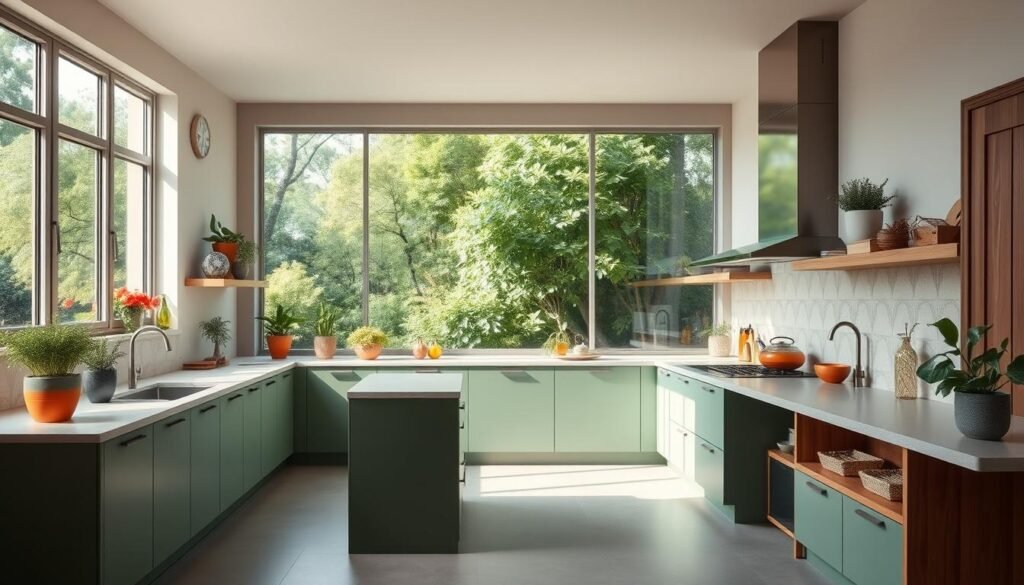
Planning an eco-friendly kitchen makeover can be easy. You can make a stunning space that shows your love for the environment. Let’s go over the main steps to bring your green kitchen dreams to life.
Begin with big changes for your home and the planet. Energy-efficient appliances are a must. They use less electricity and save money on bills. Choose models with the ENERGY STAR label.
Then, pick sustainable materials for cabinets and countertops. Bamboo, reclaimed wood, and recycled surfaces are great alternatives. They help reduce deforestation and landfill waste.
Water-saving fixtures are next. Low-flow faucets and efficient dishwashers save a lot of water. Don’t forget to add insulation and energy-efficient windows for a complete eco-friendly makeover.
Questions to Ask for Eco-Friendly Results
When hiring contractors, ask important questions. Ask about their experience with green building and materials. Also, find out how they manage waste during your project.
Ask suppliers about the materials’ origins. Look for certifications like FSC for wood or Greenguard for low-emission products. Also, ask about the distance products travel to reduce carbon footprint.
Discuss energy efficiency ratings for appliances and fixtures. Ask about recycling programs for old materials. These steps help keep your project eco-friendly.
Don’t forget to ask about non-toxic adhesives, paints, and finishes. Many products contain harmful chemicals that harm indoor air. Your contractor should suggest safer options for your family’s health.
By asking the right questions and focusing on the right things, your green kitchen will come to life. You’ll have a beautiful space that’s also good for our planet.
Maintaining Your Green Kitchen Over Time
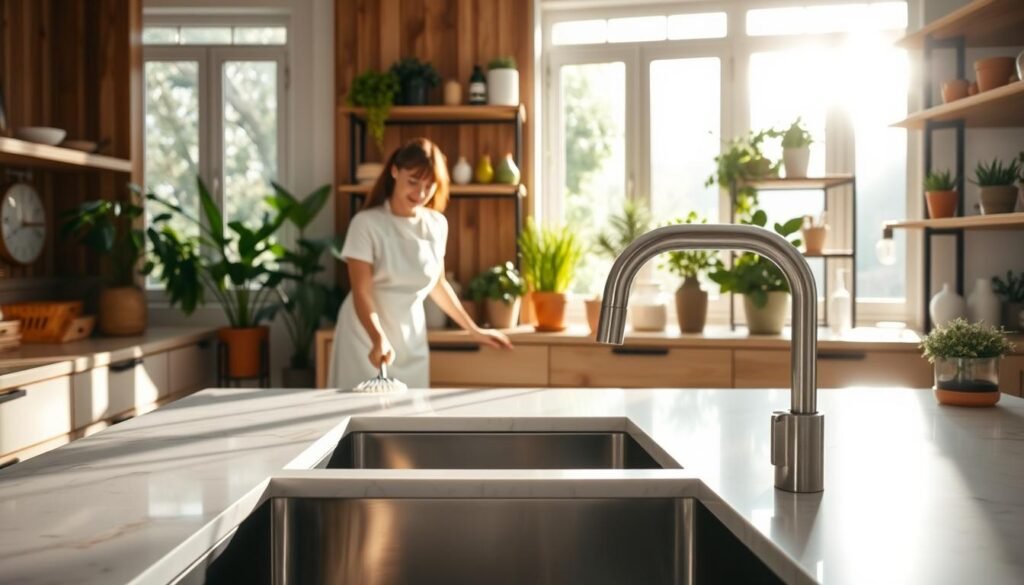
Your green kitchen needs care that matches its eco-friendly design. Keeping it up ensures it stays beautiful and sustainable. With the right steps, your kitchen will last for many years.
Cleaning and Preservation Tips
Bamboo countertops need gentle care. Use mild, plant-based cleaners and avoid harsh chemicals. Wipe spills right away to prevent stains. Regular oiling keeps bamboo looking fresh and prevents drying.
Cork floors need special care. Sweep often with a soft broom. Damp mop with pH-neutral cleaner sometimes. Avoid too much water that can harm the cork. Place protective pads under furniture legs.
For all sustainable materials, choose non-toxic cleaning products. Look for biodegradable options with natural ingredients. These cleaners protect your surfaces and the environment.
Regular maintenance prevents bigger issues later. Check seals and finishes every few months. Fix small repairs quickly to avoid bigger problems. This saves money and resources over time.
When to Upgrade and What to Choose
Appliances show signs when they need replacement. Watch for increased energy bills or strange noises. Inefficient models waste electricity and water. Upgrading improves your kitchen’s performance.
Choose Energy Star certified appliances for replacements. These models use less energy without sacrificing function. Look for water-saving features in dishwashers and refrigerators with smart temperature controls.
Consider the entire lifecycle of new products. Select items with recyclable components and minimal packaging. Some companies offer take-back programs for old appliances. This completes the sustainable cycle.
Timing matters for upgrades. Plan replacements during sales or energy efficiency rebate periods. This approach saves money while maintaining your green principles. Your kitchen evolves while staying true to its eco-friendly roots.
Inspiring Color Schemes for a Natural Look
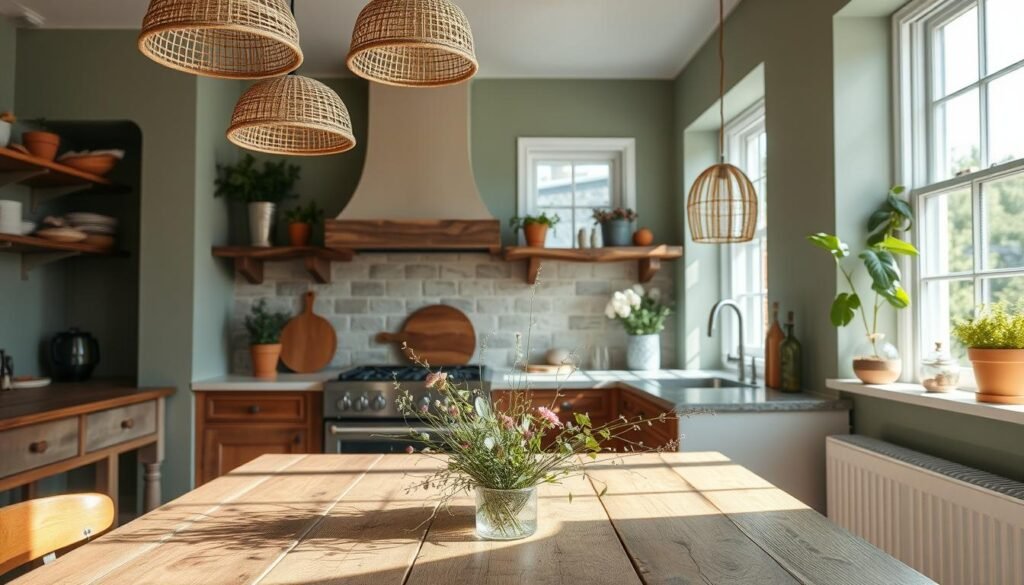
Your green kitchen’s color palette sets the mood and creates that welcoming atmosphere you love. Choosing the right combination of hues can transform your space into a peaceful retreat that feels connected to nature.
Pair different green shades with soft neutrals for a balanced look. Sage green cabinets with cream walls create a soothing effect. Olive green accents work beautifully with warm gray tones.
Earth tones like beige and taupe complement various green intensities. This approach creates harmony in your natural kitchen decor. The combination feels both fresh and grounded.
Using Stones, Woods, and Plants
Let natural materials become part of your color story. Wood grains add warmth and texture to your space. Stone countertops with subtle veining provide elegant neutral bases.
Live plants introduce vibrant green tones that change with seasons. They become living elements of your natural kitchen decor. This approach creates depth and organic beauty.
Mix different wood finishes and stone patterns carefully. They should complement rather than compete. The result is a layered, authentic look that feels both designed and naturally evolved.
Green Kitchen Trends to Watch
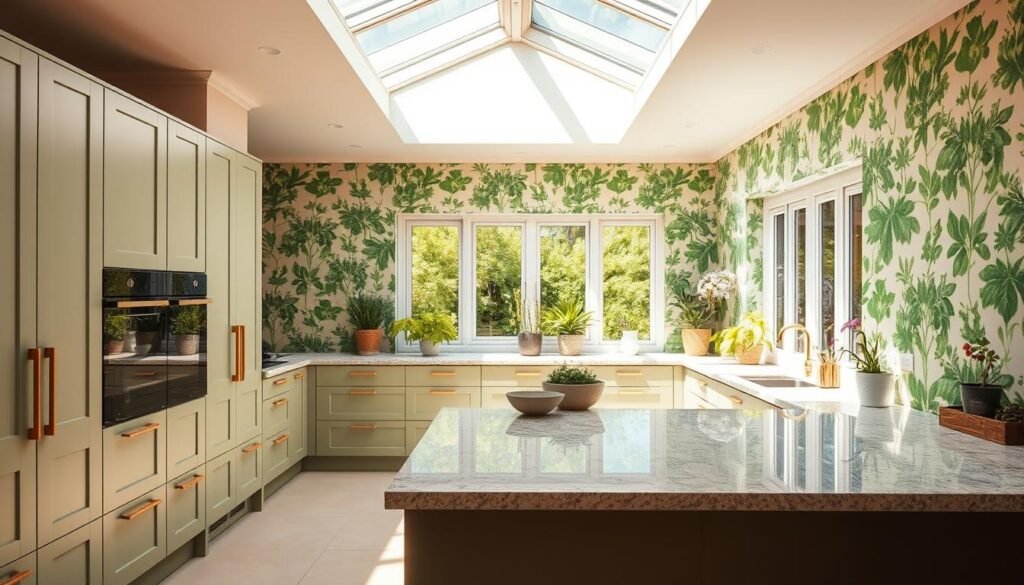
Innovative products and designs are changing what’s possible in sustainable kitchens. These trends offer exciting ways to make your space better while being kinder to the planet.
Emerging Products and Designs
New recycled composite countertops are becoming popular for their durability and eco-friendliness. Brands like PaperStone and Vetrazzo make beautiful surfaces from recycled materials. These countertops are exceptionally stain resistant and look great.
Water-saving faucet technologies are another big step forward. Touchless faucets with smart sensors cut down water use a lot. Many now use less than 1.0 gallons per minute without losing performance.
Integrated composting systems are getting better and easier to use. Under-counter composters with odor control make it simple to manage waste. They turn food scraps into soil amendment right in your kitchen.
Energy-efficient induction cooktops are getting smarter. New models have precise temperature control and cook faster. They save a lot of energy compared to traditional ranges.
How Trends Influence Your Choices
When looking at new trends, think about what fits your lifestyle and values. Pick innovations that really help the environment, not just look good. Look for products with certifications like Energy Star or WaterSense.
Think about how long a trend will last in your kitchen. Mix timeless design with sustainable tech for a space that stays current. Choose features that won’t go out of style fast.
Check the upkeep needs of new products before buying. Some materials might need special care or cleaning products. Make sure any trend you choose fits your cleaning routine.
The best choice is often the one you’ll keep the longest. Trends should make your kitchen more functional and eco-friendly. Your green kitchen should show your style and reduce waste.
Bringing It All Together for Your Dream Kitchen
You now have the tools to create an environmentally friendly kitchen remodel that reflects your values. From sustainable materials to energy-efficient appliances, every choice makes a difference.
Your dream kitchen can be both beautiful and kind to the planet. Think about natural light, fresh herbs on the windowsill, and non-toxic finishes that keep your space healthy.
Planning an environmentally friendly kitchen remodel is a journey worth taking. Start small if you need to, and build toward the kitchen you’ve always wanted.
Your efforts will pay off in a space that feels good to use every day. Enjoy your new green kitchen—it’s a step toward a greener home and a healthier world.