
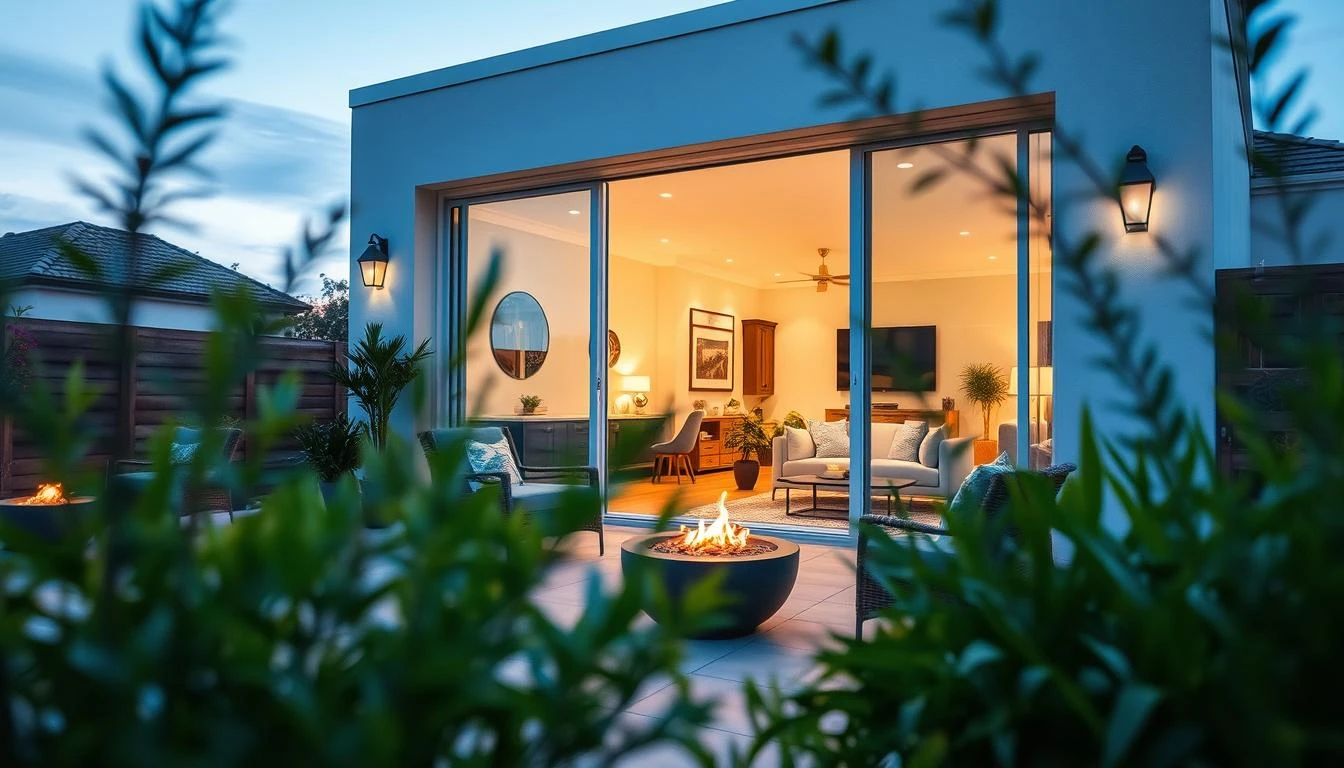
Imagine walking from your cozy living room into your stunning backyard. This dream is possible with the right design. It brings nature right into your daily life.
This design idea is loved by many in American homes. It changes how you live. You get more natural light, better air, and more space for parties without adding rooms.
Your home becomes a welcoming place for friends and family. Being close to nature lifts your mood. This guide will help you create this beautiful blend.
Key Takeaways
- Create a seamless connection between your indoor and outdoor areas
- Enjoy more natural light and better air circulation throughout your home
- Expand your entertaining space without construction additions
- Enhance your daily living experience with nature integration
- Increase your home’s visual appeal and functional space
- Transform how you use both interior and exterior areas of your property
Understanding Outdoor-Indoor Flow: Integrating Patios Into Living Spaces
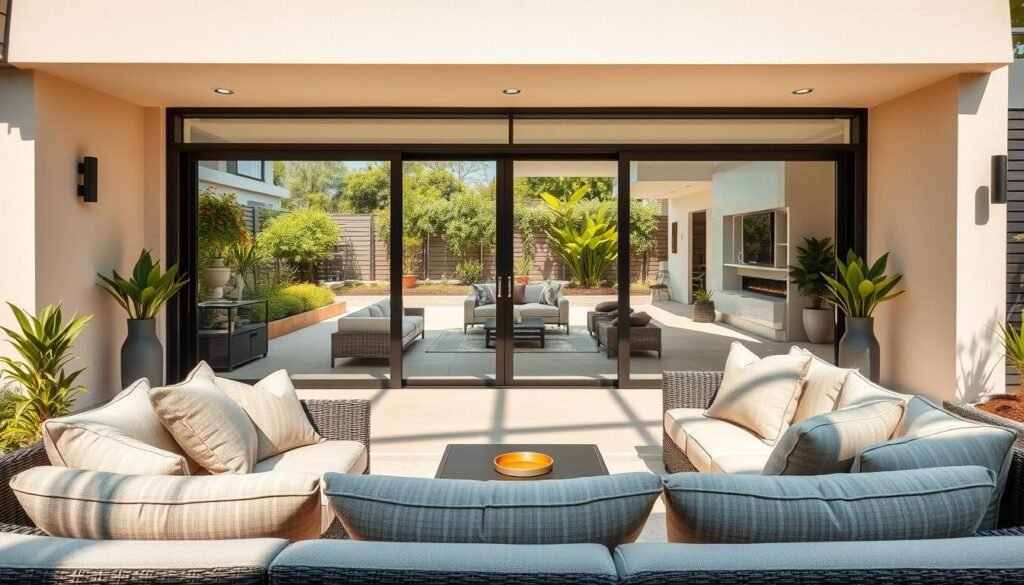
When your patio becomes part of your home, magic happens. Outdoor-indoor flow isn’t just about open doors. It’s about making your home’s inside and outside feel like one.
This idea changes how you see your home. Instead of separate areas, you have one big space. Your home feels bigger and more connected to nature.
Being close to nature lowers stress. Natural light makes your home brighter and happier.
Practical benefits are big too. Your home gets better air flow and can save on cooling costs in summer.
Adding a patio means more space without the cost. It’s perfect for parties, relaxing, or dining. It changes with the seasons and your plans.
Visual flow is key. Use the same materials and colors to make the transition smooth. It should feel natural, not jarring.
Think about how you move around your home. The goal is to make it easy to use both areas. You might find yourself enjoying the outdoors more.
This design makes every season special. Spring mornings are lovely with fresh air. Summer evenings are magical with indoor and outdoor spaces together.
Integrating patios creates the perfect indoor-outdoor lifestyle. You get beauty and function that boosts your home’s value and quality of life. Your home feels complete, connected, and balanced.
The Foundation of Seamless Transition Design
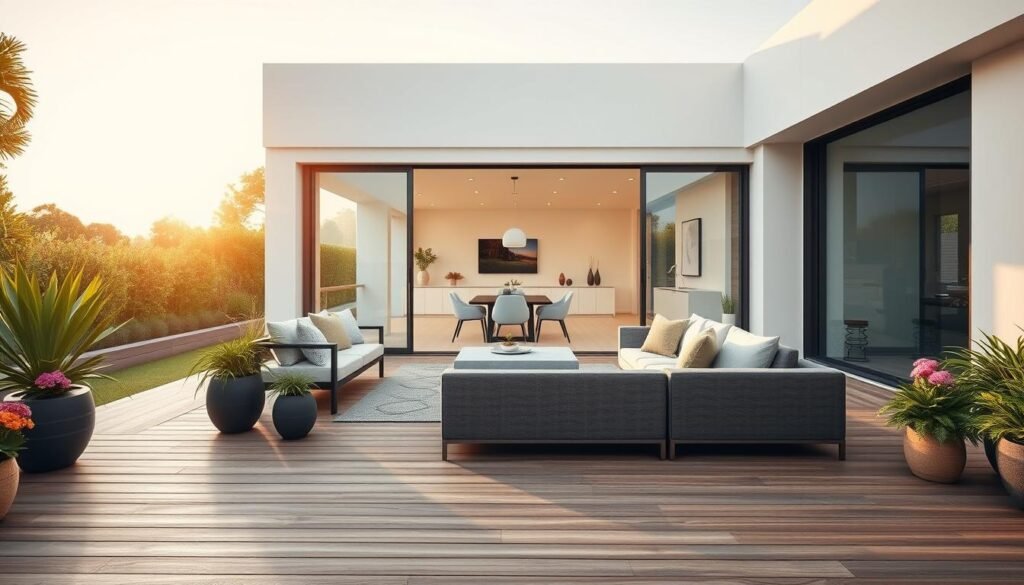
Creating seamless transitions between indoor and outdoor living spaces starts with thoughtful foundational design. Your patio should feel like a natural part of your home, not separate. This requires careful planning of several key elements for effortless flow.
Proper elevation matching is the physical foundation of your transition space. When your indoor floor and outdoor surface are at the same level, moving between areas is easy and safe. This eliminates tripping hazards and creates a visual continuity that connects spaces.
Threshold design is crucial in connecting your spaces. The transition point should feel like a gentle invitation, not a barrier. Wide door openings, minimal door frames, and flush thresholds encourage natural movement.
Smart spatial planning considers how people move through and use connected areas. Think about the paths you take between indoor and outdoor spaces. Designing with these patterns in mind ensures your layout supports real-life use.
Assessing your current space helps identify opportunities for better flow. Look at sight lines from key interior positions to your outdoor areas. Can you see the garden from your favorite chair? These visual connections make spaces feel integrated even when doors are closed.
Consider how different family members will use the connected living spaces. Children might need safe, visible transitions for play. Adults might prioritize easy entertainment flow for hosting. Pets might require secure boundaries while maintaining access. Understanding these varied needs helps create transitions that work beautifully for everyone who enjoys your home.
Whether you’re working with new construction or renovating existing living spaces, these foundational principles remain the same. They provide the framework for creating transitions that feel natural, functional, and beautifully integrated. Getting these basics right ensures your outdoor-indoor flow will stand the test of time and changing needs.
Choosing the Right Flooring Materials
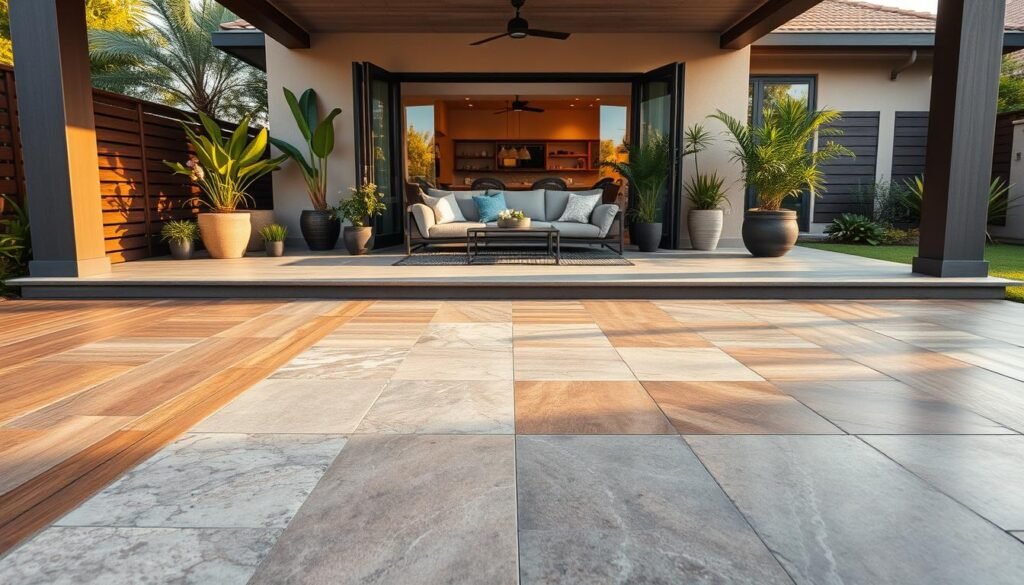
Your flooring choice is key to a perfect outdoor living design. The right materials make your spaces flow well. They also create a beautiful look that ties your indoor and outdoor areas together.
Porcelain tiles are great for indoor-outdoor spaces. They look like natural stone or wood grain. This creates a consistent look in your living areas.
Porcelain Tiles Pros
Excellent durability is a big plus. These tiles stand up to weather, stains, and heavy foot traffic. They keep looking good through the seasons.
Porcelain Tiles Cons
The cost to install them can be high. It’s best to get professionals for the job. Cold surfaces might need area rugs for comfort.
Porcelain Tiles Features
Look for slip-resistant finishes for safety outdoors. Many options work with radiant heating systems indoors. You can choose from a wide range of colors and patterns.
Composite Decking Overview
Composite decking adds warmth and texture to your outdoor space. It’s made from recycled materials and polymers. This creates a look that matches many architectural styles.
Composite Decking Pros
Low maintenance is a big advantage. These materials resist rotting, splintering, and insects. Many come with long warranties for peace of mind.
Composite Decking Cons
Some composites can get hot in the sun. They may show scratches more than natural wood. Color options are limited compared to other flooring types.
Composite Decking Features
Hidden fastening systems give a clean look. Many products have built-in slip resistance. The modular design lets you create unique patterns and layouts.
Polished Concrete Overview
Polished concrete adds a modern, industrial feel. It works well indoors and outdoors. Stained and scored concrete can create artistic effects.
Polished Concrete Pros
Superior durability makes concrete a great choice. It handles temperature changes and heavy use well. It also helps regulate indoor temperatures naturally.
Polished Concrete Cons
The hard surface can be hard on feet and dropped items. Professional installation is needed. Cracking can happen over time without proper reinforcement.
Polished Concrete Features
Staining techniques create beautiful colors and patterns. Sealing products protect against moisture and stains. Adding radiant heating makes it cozy in cooler months.
Think about how each material fits your outdoor living design. Consider maintenance needs and how they match your lifestyle. The right choice makes your spaces seamless and perfect.
Expanding Your Living Space with Sliding Systems
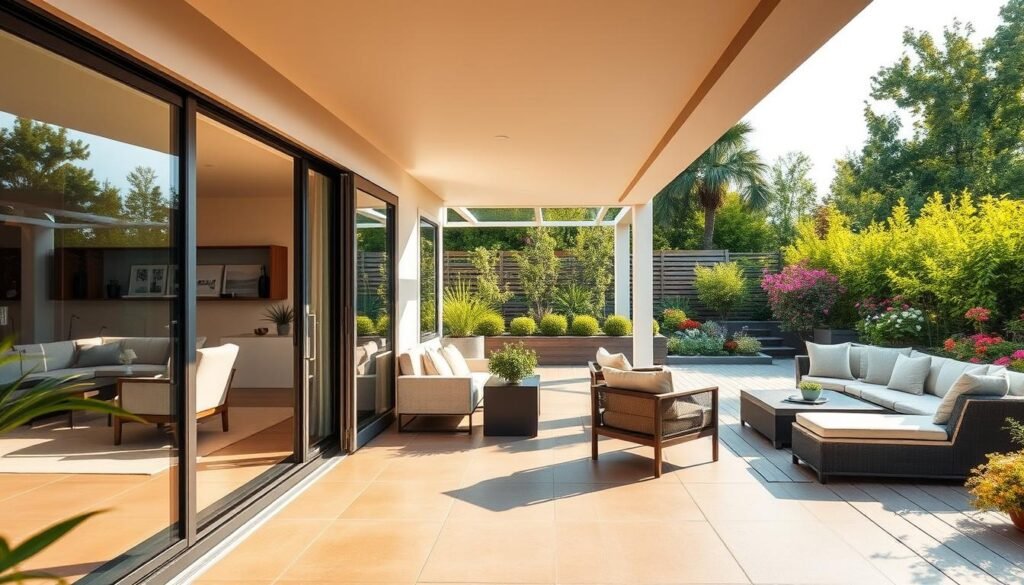
Imagine making your living area bigger with sleek sliding systems. They make the line between inside and outside disappear. This change makes your home feel new and exciting.
There are three main types of sliding systems. Each one has its own benefits for your patio project.
Multi-panel sliding glass doors have big glass panels that slide along tracks. They open wide, letting lots of natural light in.
Multi-Panel Sliding Glass Doors Pros
You get unobstructed views of your outdoor space. These systems are energy efficient and work smoothly.
Multi-Panel Sliding Glass Doors Cons
They might cost more than regular doors at first. You need enough wall space for the panels. Keeping the tracks clean is important for them to work well.
Multi-Panel Sliding Glass Doors Features
Look for screens to keep bugs out in warm months. They have strong locks and seal well to keep out drafts and water.
Folding Glass Wall Systems Overview
Folding glass walls have panels that stack up when open. They make a big opening, almost like removing the wall.
Folding Glass Wall Systems Pros
They offer maximum openness and flexible sizes. The panels take up little space when stacked.
Folding Glass Wall Systems Cons
They are the most expensive option. They need strong support and sometimes need adjustments.
Folding Glass Wall Systems Features
They have advanced tracks for smooth folding. The glass is high quality for better energy use. The hardware is durable for frequent use.
Pocketing Glass Doors Overview
Pocketing glass doors slide into the wall, making the opening invisible. They look clean and simple when open.
Pocketing Glass Doors Pros
They offer complete clearance and keep the look clean. They are space efficient with no visible parts.
Pocketing Glass Doors Cons
They need special wall setup during building or renovation. Retrofitting can be hard. You need planned access for the mechanics.
Pocketing Glass Doors Features
They have hidden tracks for a clean look. Weather stripping ensures a good seal. They slide quietly and reliably.
Think about your space needs, how you’ll use it, and your budget. Each system has its own benefits for the perfect patio integration.
Creating Visual Continuity with Color and Texture
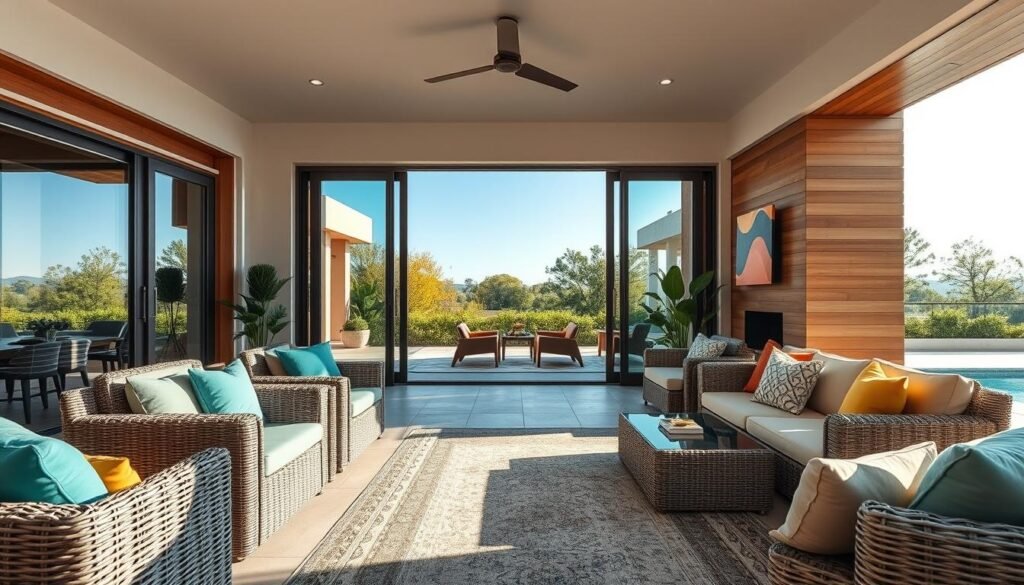
Your color palette is like an invisible thread that connects your indoor and outdoor spaces. Choose three to five colors from your home decor. Then, use these colors in your patio with cushions, rugs, and accessories. This simple step brings your living room and outdoor area together.
Texture is also key for a seamless indoor-outdoor connection. Use the same wood for your floors and decking. Or match a stone pattern from your fireplace on your patio’s wall. These choices make your spaces feel connected, not separate.
Metal finishes are great for visual continuity. Match your indoor cabinet hardware with outdoor furniture frames. Use the same metallic tones for light fixtures inside and out. These small details tie your spaces together powerfully.
Plants are nature’s perfect transition. Place large potted plants like your indoor ones just outside your doors. Use the same planters inside and on your patio. This green bridge connects your built environment to nature.
Pattern repetition adds rhythm to your spaces. If you have geometric tiles indoors, use similar outdoor rugs. Striped curtains might inspire striped patio cushions. These echoes guide your eye from inside to outside smoothly.
Wall treatments are important too. If your interior walls are textured, use similar materials on outdoor walls. Stone veneers, wood paneling, or paint colors can create a dialogue between your spaces. This makes your patio feel like a natural extension, not a separate addition.
Think about your view from inside looking out. Arrange outdoor furniture in colors that match your interior. Choose plants that echo your indoor greenery. These thoughtful choices ensure your seamless indoor-outdoor connection works beautifully from both sides, delighting the eye every season.
Lighting Solutions for Day and Night Flow
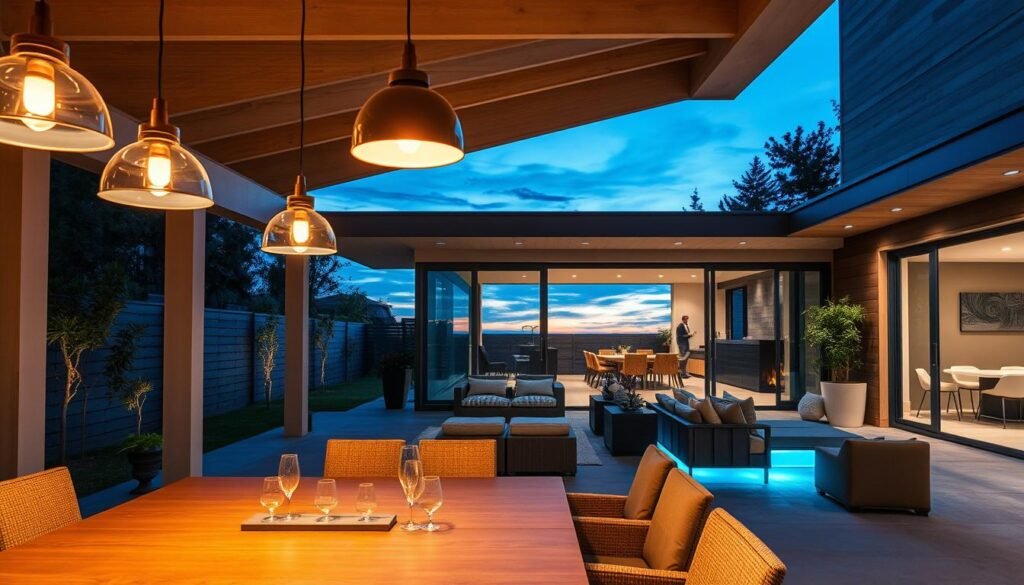
Great lighting makes your space look different during the day and night. It helps you enjoy your patio even when it’s dark. Let’s look at three popular lighting options for your home.
Integrated LED systems are built into your home. They light up pathways and steps. These systems use low-voltage electricity for safety.
Pros
Weather-resistant designs handle rain and sun well. They are energy-efficient, saving on electricity bills. The lighting creates a beautiful glow between spaces.
Cons
Professional installation costs more than DIY. Some systems need wiring through walls or under decks. The initial cost can be higher than basic lighting.
Features
Look for dimmable options to adjust brightness. Color temperature settings match your indoor lighting. Many systems include timers for automatic operation.
Solar-Powered Options
Overview
Solar lighting captures energy from the sun. It lights up your space at night. No electrical wiring makes installation simple.
Pros
Zero operating costs after buying. It’s environmentally friendly using renewable energy. Easy to move and rearrange as your needs change.
Cons
Performance depends on sunlight. Lighting intensity might decrease at night. Limited options for cloudy or shaded areas.
Features
Motion sensors activate lights when you approach. Automatic dusk-to-dawn operation requires no manual switching. Weather-resistant construction withstands outdoor conditions.
Smart Lighting Controls
Overview
Smart systems let you control lighting from your phone or voice commands. You can create custom scenes that blend indoor and outdoor spaces. These systems integrate with other smart home devices.
Pros
Remote access lets you adjust lights from anywhere. Customizable scenes create perfect ambiance for any occasion. Energy monitoring helps track and reduce electricity usage.
Cons
Higher initial cost compared to basic lighting systems. Requires reliable Wi-Fi connection for full functionality. Some systems need professional programming for optimal setup.
Features
Voice control works with popular assistant platforms. Scheduling features automate lighting based on your routine. Integration with security systems enhances home protection.
Choose lighting that matches your lifestyle and home design. Proper placement ensures safety and highlights your space’s best features. Good lighting makes your outdoor-indoor flow work beautifully day and night.
Climate Control Products for Year-Round Comfort
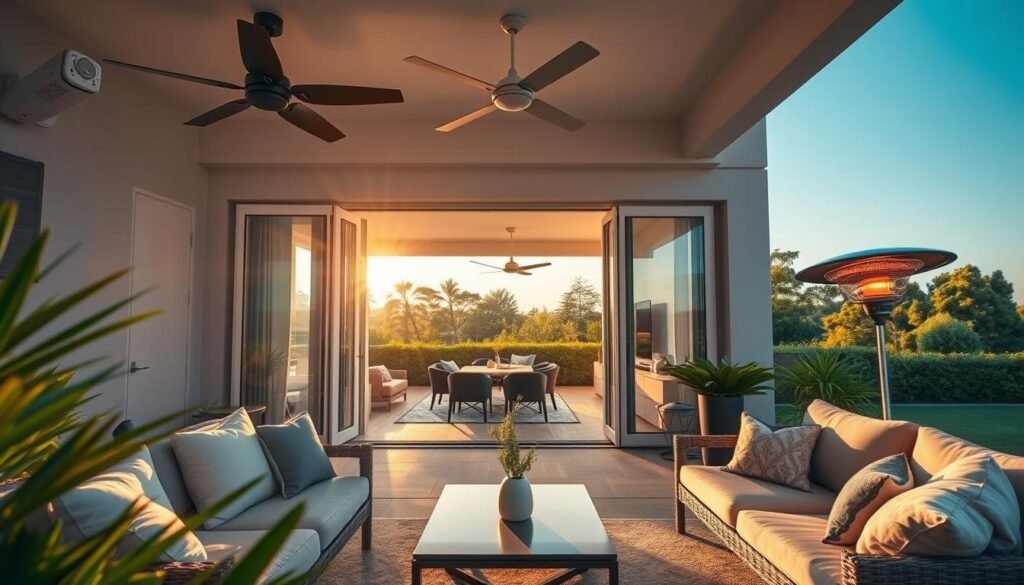
Keeping your spaces perfect all year round needs the right tools. These climate control solutions make your indoor-outdoor areas welcoming all seasons.
Outdoor Heating Systems Overview
Outdoor heating lets you enjoy your patio even when it’s cold. These systems create warm spots, making your spaces cozy when it’s chilly.
Outdoor Heating Systems Pros
Immediate warmth lets you enjoy your outdoor space on cool days. Most systems are energy smart, heating just where you need it.
There are portable and permanent options. You can place them to fit your space best.
Outdoor Heating Systems Cons
Some systems need a pro to install, adding to the cost. Fuel-based ones need regular refills or gas line connections.
Electric models might raise your energy bills. It’s key to place them right for best performance and safety.
Outdoor Heating Systems Features
Look for systems with adjustable heat and safety shut-off. They should be weather-resistant for outdoor use.
Infrared tech heats directly, without warming the air. Some come with remote controls for easy use from inside.
Cooling systems keep your spaces cool in summer. They lower temperatures on hot days, making your outdoor areas comfortable.
Cooling Solutions Pros
Effective temperature reduction makes outdoor spaces cool and refreshing. Misting systems use little water but cool a lot.
Many cooling options are energy efficient and simple to use. They help cut down on indoor cooling costs by making outdoor areas more comfy.
Cooling Solutions Cons
Some systems need water line connections or frequent refills. Higher-end models might require a pro to install.
Misting systems can make surfaces wet if not set right. Energy use varies a lot between cooling technologies.
Cooling Solutions Features
Adjustable mist levels let you customize based on weather. Look for systems with automatic shut-off and timers.
They should be weatherproof for lasting outdoor use. Some models have humidity sensors for better performance.
Weather Protection Products Overview
Weather protection systems keep your spaces safe from rain, sun, and wind. They create sheltered areas that stay comfy in different weather.
Weather Protection Products Pros
Versatile protection from various weather elements makes them useful. Retractable options offer flexibility based on the weather.
Many systems also boost privacy and protect from weather. They can reduce sun exposure that warms up your indoor spaces.
Weather Protection Products Cons
Permanent structures might need building permits in some places. Higher-quality materials cost more.
Motorized systems need electrical connections and occasional upkeep. Some designs might block views when deployed.
Weather Protection Products Features
Look for UV-resistant fabrics and strong frame materials. Wind sensors automatically retract systems in strong winds.
Remote operation makes adjusting easy from inside. Water-resistant fabrics keep you dry in the rain.
Integrated lighting makes evening use of protected spaces better. Adjustable angles help block sun throughout the day.
Furniture That Bridges Indoor and Outdoor Spaces
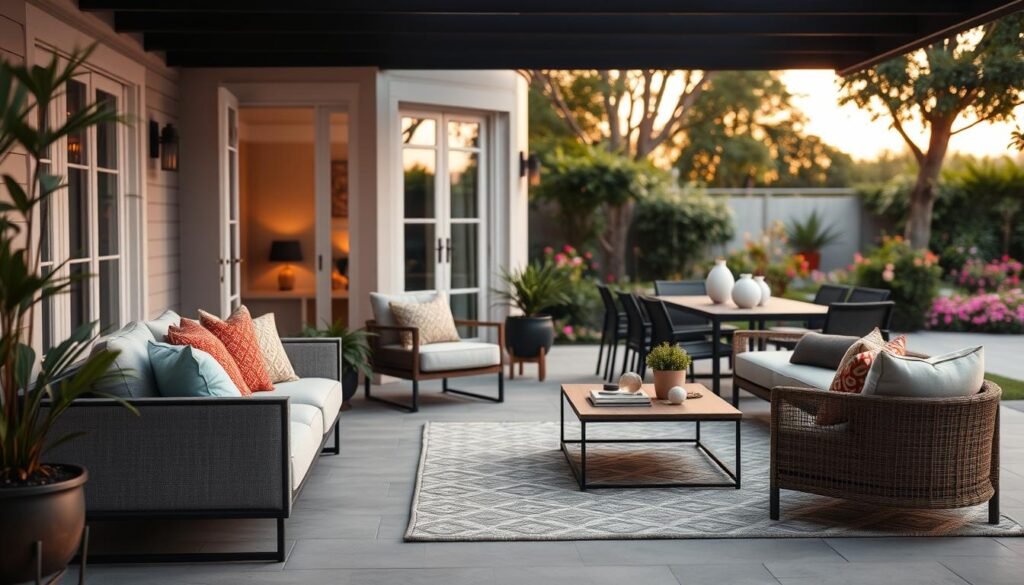
Choosing the right furniture makes your indoor and outdoor areas feel connected. The best pieces work well in both places, creating a cohesive look.
Let’s look at three great material options that are stylish and durable. These choices help you create beautiful patio design ideas that flow smoothly from inside to outside.
All-Weather Wicker Overview
All-weather wicker adds a natural touch to your spaces. It’s a synthetic material that looks like traditional wicker but lasts longer outdoors.
This material uses resin fibers that resist moisture, fading, and cracking. It keeps its look through sun, rain, and temperature changes.
Excellent durability makes it perfect for all-year use. It won’t rot or splinter like natural wicker.
Low maintenance cleaning needs save you time. Just wipe it down with mild soap and water occasionally.
Lightweight construction lets you easily rearrange furniture. You can set up different layouts for different occasions.
All-Weather Wicker Cons
Some cheaper versions might feel less sturdy than other materials. Quality can vary between manufacturers.
The synthetic look might not appeal to everyone. Some prefer the real look of natural materials.
All-Weather Wicker Features
Look for UV-resistant coatings to prevent fading. Good quality pieces have this protection.
Modular sectional seating offers flexible arrangements. You can create conversation areas that work indoors or outside.
Built-in storage solutions protect cushions when not in use. This keeps your space tidy and organized.
Powder-Coated Aluminum Overview
Powder-coated aluminum offers modern style with serious durability. The powder coating process creates a tough, colorful finish.
This material works beautifully in contemporary settings. Its clean lines complement both indoor and outdoor decor.
Powder-Coated Aluminum Pros
Rust-proof performance ensures long-lasting use. Aluminum naturally resists corrosion.
Weather resistance handles all seasons well. It won’t warp or crack in extreme temperatures.
Lightweight yet strong construction makes moving easy. You can reposition pieces without strain.
Powder-Coated Aluminum Cons
Some people find aluminum less comfortable than other materials. It can feel cool to the touch in colder weather.
The modern aesthetic might not suit traditional home styles. Consider your overall design theme.
Powder-Coated Aluminum Features
Look for thick powder coatings for better durability. Quality pieces have multiple coating layers.
Stackable chairs save storage space when not in use. This is great for smaller patios or balconies.
Weather-resistant tables with tempered glass tops add elegance. They work equally well for indoor dining or outdoor entertaining.
Teak Wood Overview
Teak wood brings natural warmth and classic beauty to your spaces. This premium material ages gracefully over time.
Natural oils in teak make it resistant to moisture and pests. It develops a beautiful silver-gray patina if left untreated.
Teak Wood Pros
Natural durability stands up to decades of use. High-quality teak furniture lasts for generations.
Beautiful aging process creates character over time. The wood develops a lovely silver-gray color naturally.
Inherent weather resistance requires no chemical treatments. The wood’s natural oils protect it.
Teak Wood Cons
Higher initial cost might exceed some budgets. Teak is among the more expensive outdoor furniture options.
Regular maintenance preserves the original golden color. You’ll need to oil it annually if you prefer this look.
Teak Wood Features
Look for solid wood construction with mortise and tenon joints. This traditional joinery ensures strength and durability.
Modular seating systems with deep cushions offer superior comfort. They create inviting spaces for relaxation.
Integrated side tables with weather-resistant surfaces provide convenience. They’re perfect for holding drinks and snacks.
Choosing furniture that works both indoors and outside completes your patio design ideas. The right pieces create visual harmony while providing practical comfort.
Consider how each material fits your lifestyle and climate. Your perfect furniture should be beautiful and functional in all your living spaces.
Green Elements for Natural Transitions
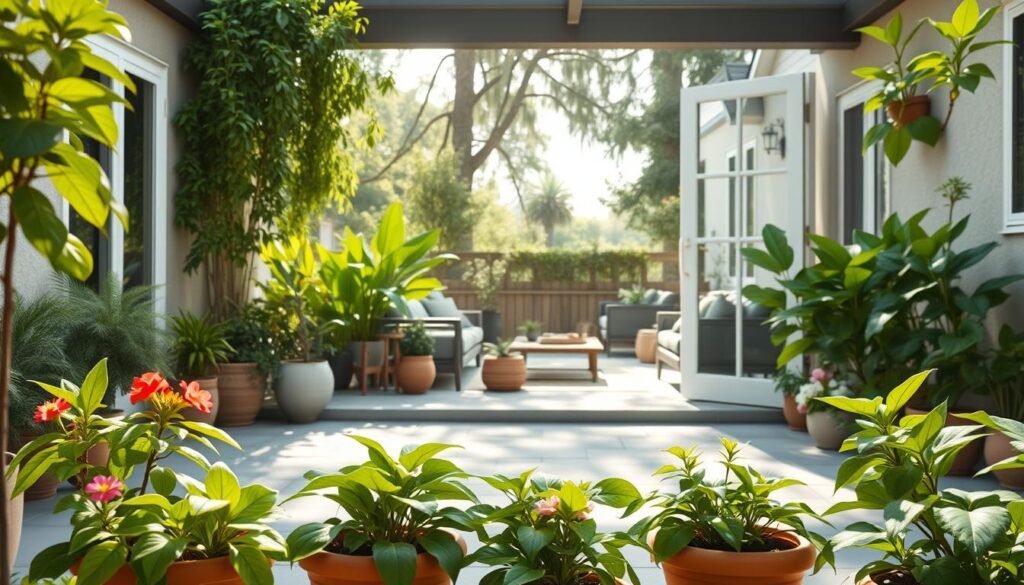
Green elements connect your indoor comfort with outdoor beauty. They create organic transitions, making your spaces feel cohesive and harmonious.
Strategic planting frames your views and creates natural pathways. Place taller plants at the edges to guide the eye between areas. Use medium-height shrubs to define spaces without blocking sightlines.
Container gardening provides flexibility to blur boundaries. Move potted plants between your patio and living room as seasons change. This creates a dynamic flow that evolves with your needs.
Vertical gardens bring greenery onto walls and fences. These living walls create stunning visual interest while saving floor space. They work equally well on interior accent walls and exterior surfaces.
Choose indoor plants that mirror your outdoor species. Repeat similar leaf shapes, colors, or textures inside and outside. This repetition creates visual harmony that ties your spaces together.
Water features add movement and sound to both environments. A small indoor fountain can echo the feeling of an outdoor pond. The gentle sound of water creates calming continuity.
Natural stone and wood elements enhance the organic feel. Use similar materials indoors and out for consistency. Stone pavers outside can transition to stone tile inside.
Select plants suited to your local climate for easier maintenance. Native species typically require less water and care. They also attract local wildlife for added natural beauty.
Consider irrigation systems for your container and garden plants. Drip systems save water and time. Smart controllers adjust watering based on weather conditions.
Maintain your green elements for year-round appeal. Regular pruning keeps plants healthy and attractive. Seasonal cleaning prevents pest issues and maintains beauty.
These natural elements create a living connection between spaces. They evolve and grow with your home, offering ever-changing beauty. Your integrated spaces will feel truly alive and connected.
Window Treatments for Flexible Transitions
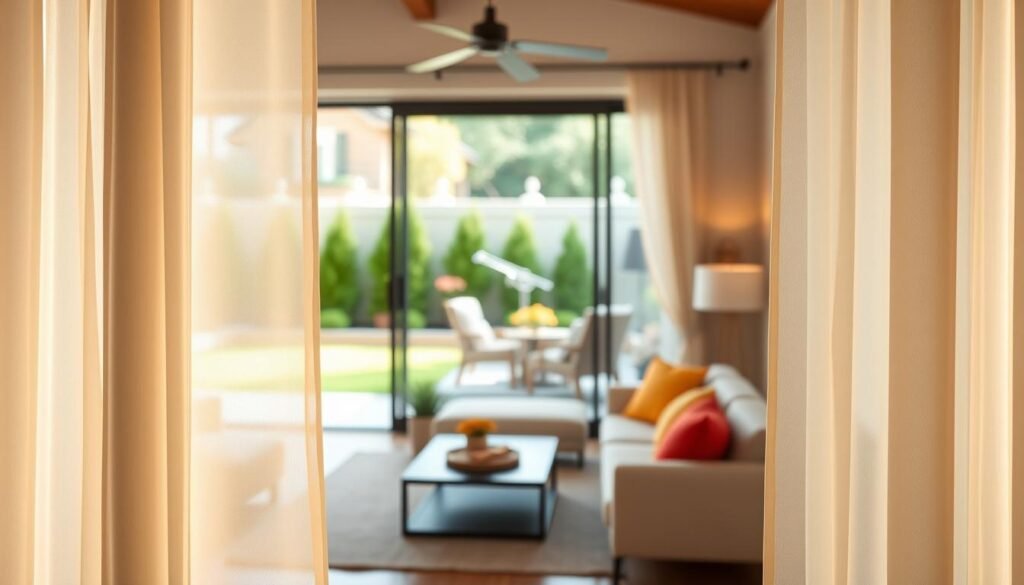
Window treatments do more than keep things private. They help control light and make transitions smooth. The right coverings can make your indoor and outdoor areas feel connected all day.
Today, you can find motorized shades that change with the sun. Sheer curtains soften bright light but still let you see outside. And, outdoor blinds can handle the weather while working well.
Choose treatments that match your style and offer real benefits. Look for ones with UV protection to keep your furniture looking good. They should also keep your space at a comfy temperature all year.
Window treatments adjust to your needs as the day goes on. They let you have an open space when you want. But they also give you privacy when you need it.
Your window coverings are more than just decorations. They help manage light, views, and privacy in your space. This makes your indoor-outdoor areas more enjoyable and functional.
Sound Systems for Continuous Entertainment
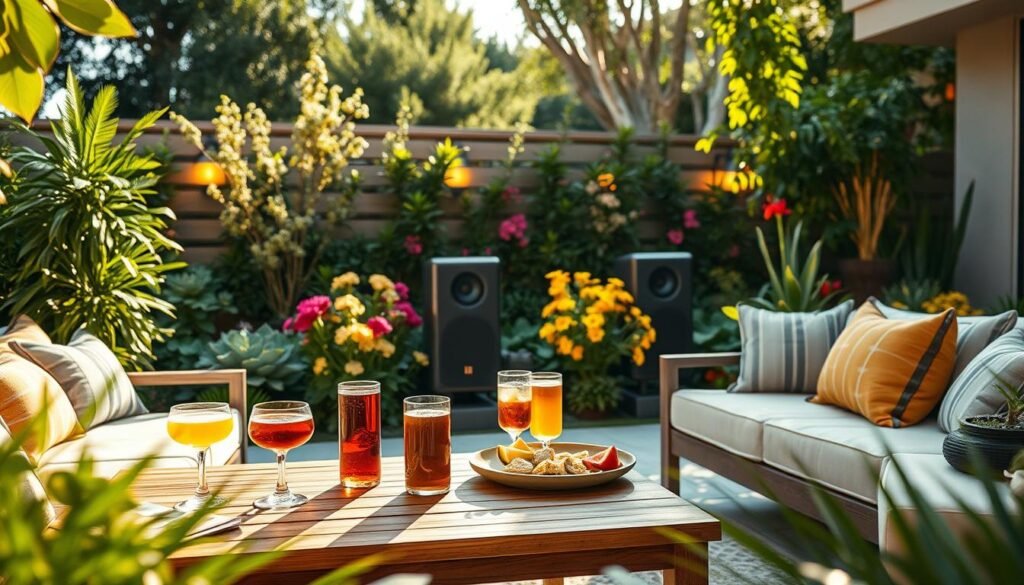
Your outdoor-indoor flow isn’t complete without music that moves with you from room to patio. The right audio setup creates a seamless atmosphere whether you’re hosting gatherings or enjoying quiet moments. You’ll want sound that follows you naturally without abrupt volume changes or dead zones.
Weather-resistant outdoor speakers form the foundation of your exterior audio experience. These durable units withstand rain, sun, and temperature changes while delivering crisp sound. Many models connect directly to your existing indoor audio system for unified control. You can find speakers designed to blend with your home’s exterior or landscape features.
Wireless multi-room audio solutions offer incredible flexibility for synchronized playback. Systems like Sonos or Bose allow you to group speakers across different areas. You can play the same music everywhere or different tunes in separate zones. Control everything through smartphone apps or voice commands for ultimate convenience.
Discreet audio options like rock speakers or buried subwoofers maintain your landscape aesthetic. These hidden solutions provide sound without visual clutter. Strategic placement near seating areas or along pathways ensures even coverage. Consider directional speakers for focused audio in specific zones.
Proper speaker placement maximizes sound quality throughout your connected spaces. Position outdoor speakers under eaves for protection from elements. Angle them toward listening areas rather than straight out. For larger patios, use multiple speakers at lower volumes instead of one loud unit.
Volume balancing creates smooth transitions between indoor and outdoor areas. Your system should automatically adjust levels as you move between spaces. Many modern systems feature smart sensors that compensate for outdoor ambient noise. This maintains consistent perceived volume regardless of your location.
Control systems make managing whole-property audio surprisingly simple. Wall-mounted keypads, mobile apps, and voice assistants put control at your fingertips. Create presets for different occasions like dinner parties or background music. Some systems even geofence to automatically start music when you arrive home.
The right sound system transforms how you experience your blended living spaces. Continuous audio enhances gatherings and creates cohesive atmosphere throughout your property. With careful planning, your music will flow as naturally as your movement between indoors and out.
Practical Considerations for Your Project
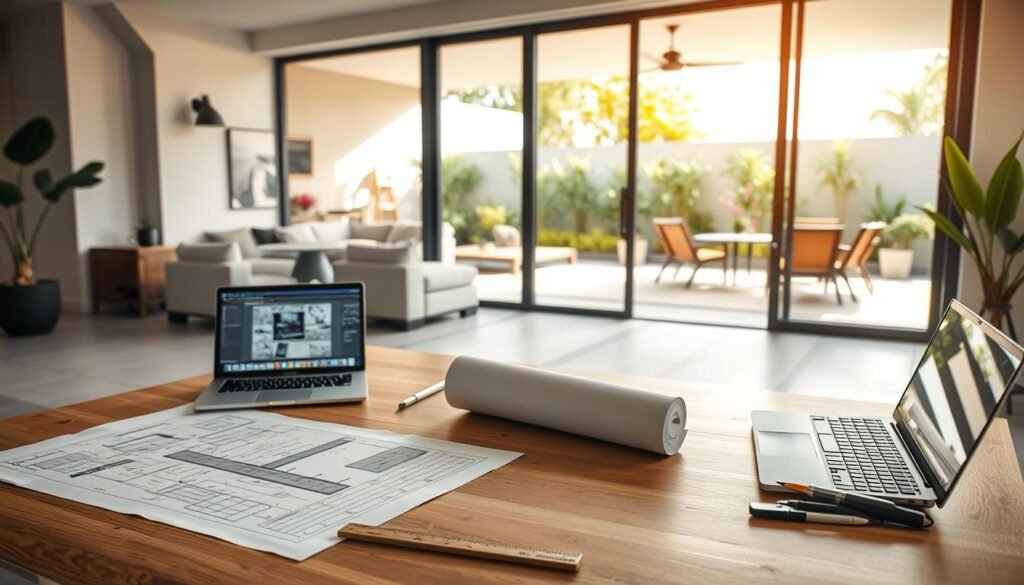
Turning your patio into a part of your home needs careful planning. We’ll look at key factors for a successful outdoor-indoor flow project.
Start by setting a budget and timeline. Use project management software to track costs and milestones.
Budgeting and Planning Pros
Proper planning prevents costly mistakes and keeps your project on track. It helps you control expenses and make smart material choices.
Budgeting and Planning Cons
Planning takes time and research. Despite preparation, unexpected issues can still happen.
Budgeting and Planning Features
Use measuring tools for accurate space assessment. Set aside contingency funds for surprises. Plan in phases for complex projects.
Permits and Regulations Overview
Understanding local building codes and permits is key for legal compliance. Research your area’s rules before starting.
Permits and Regulations Pros
Proper permits ensure safety standards and protect your investment. They prevent legal issues and neighborhood disputes.
Permits and Regulations Cons
Permit processes can be slow and costly. Some design choices might be limited by regulations.
Permits and Regulations Features
Check zoning rules for outdoor structures. Know setback and drainage regulations for your area.
Professional Services Overview
Working with experienced contractors and designers improves your project. They ensure structural integrity and design quality.
Professional Services Pros
Professional guidance avoids common pitfalls and ensures proper execution. They handle technical aspects you might miss.
Professional Services Cons
Professional services increase costs. Choose contractors carefully to find the right fit.
Professional Services Features
Find contractors with outdoor living experience. Use protective coverings for surfaces during construction. Get multiple quotes and check references.
By considering these practical aspects, you’ll lay a strong foundation for your outdoor-indoor flow project. Thoughtful planning leads to beautiful, functional spaces that improve your daily life.
Maintenance Tips for Your Integrated Spaces
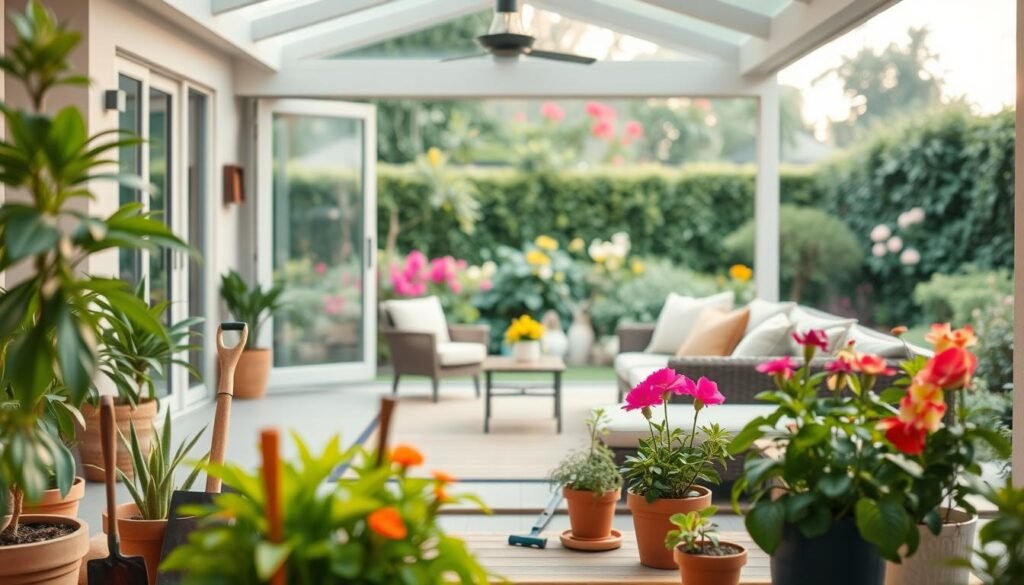
Keeping your blended spaces looking great needs regular care. This care should match their unique design. It ensures your outdoor-indoor connection stays beautiful and functional for years.
Make seasonal checklists to handle different materials all year. Spring cleaning removes winter debris. Fall prep protects against cold weather.
Sliding door tracks need monthly care to avoid sticking and damage. Use a soft brush to clean off debris. Then, apply a silicone-based lubricant for smooth opening and closing.
Outdoor furniture needs different cleaning methods based on its material. Regular cleaning prevents weather damage and makes your furniture last longer.
Flooring materials need special care. Composite decking is cleaned gently. Stone surfaces might need sealing to keep looking good.
Electrical parts must be weatherproof for safety. Use waterproof covers and check connections for moisture damage often.
Make a maintenance plan that fits your space’s needs. Preventive care saves time and money by avoiding big repairs later.
Your integrated spaces will stay beautiful with consistent care. Proper maintenance makes your indoor-outdoor connection fun with little effort.
Small Space Solutions for Urban Dwellers
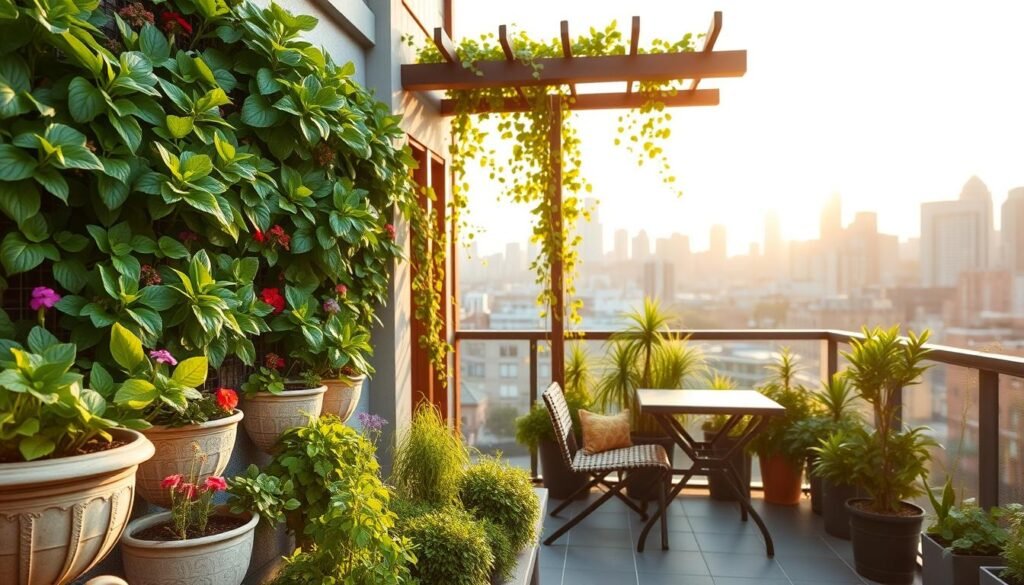
You don’t need a big backyard to enjoy the outdoors. Urban folks can make small spaces work with clever ideas. Even a tiny balcony or terrace can feel like part of your home.
Vertical gardening is a top pick for small spaces. Wall planters or hanging baskets add greenery up high. This saves floor space and lets you grow herbs and veggies.
Foldable furniture is a game-changer for small areas. Look for tables and chairs that fold up. Multi-functional items, like storage ottomans, offer extra seating and keep things tidy.
Visual tricks can make small spaces look bigger. Use the same colors inside and out for a seamless look. Light colors reflect light, making spaces feel larger. Placing elements thoughtfully helps guide the eye through both areas.
Choose plants that fit your small space well. Dwarf varieties and container gardening are great. They add beauty without overwhelming the area.
Set up cozy seating areas that flow from indoors. Arrange furniture to face both ways. This encourages movement and makes you want to spend more time outside.
Mirrors can make small spaces look bigger. They reflect light and views, expanding your space. Soft, warm lights add to the cozy feel of both areas.
With creative design, even tiny outdoor areas can be valuable. Your urban spaces will feel connected, functional, and beautiful.
Seasonal Adaptation Strategies
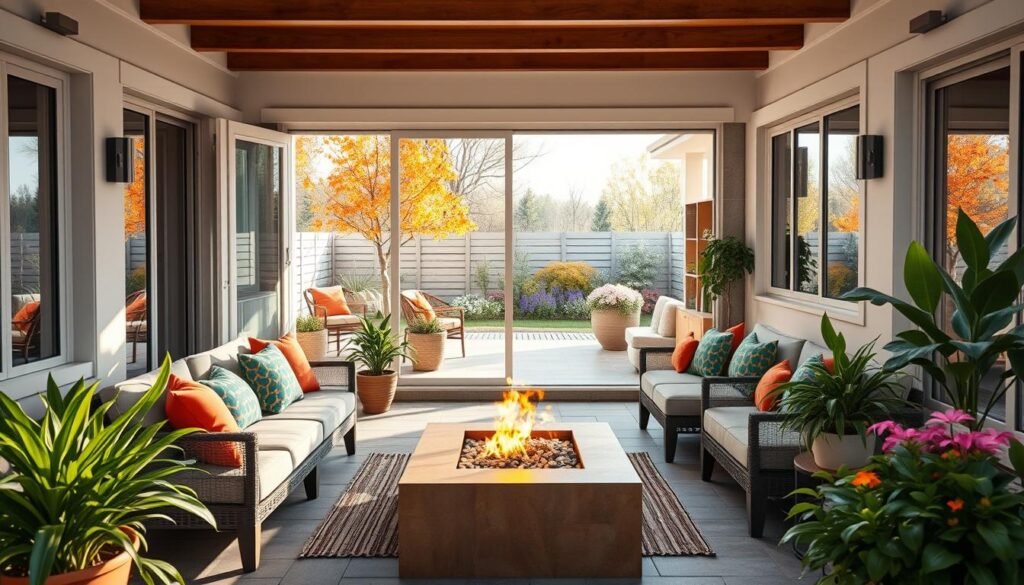
Your outdoor and indoor space needs care all year, not just when it’s nice outside. Seasonal adaptation makes your transition areas useful and pretty, no matter the weather.
Winter needs special care to keep your space safe. Use protective covers for furniture and delicate areas. Thermal curtains or insulated panels for big glass doors help save energy and keep the view.
Make your outdoor space cozy for winter with outdoor rugs and weatherproof pillows. These keep your space looking good even when you’re not using it. Smart lighting can make frost or snow look magical.
Summer calls for smart shade to keep you cool. Try retractable awnings, pergolas, or trees for shade. Use light, breathable fabrics for seats to stay comfy in the heat.
Spring and autumn have their own needs and chances. Set up ways to handle leaves and debris that could harm your space. It’s a great time to update plants and check for weather damage.
Your outdoor furniture also needs seasonal care. Find places to store furniture that can’t handle bad weather. Switch out cushions and fabrics with the seasons to stay comfy and stylish.
Don’t forget to protect plants from extreme temperatures. Move sensitive plants inside for winter or use shade cloth in summer. This keeps your plants part of your space all year.
With careful seasonal adaptation, you can enjoy your mixed spaces all year. Each season offers new ways to connect indoors and outdoors.
Bringing Your Outdoor-Indoor Vision to Life
Your journey to a seamless outdoor-indoor flow starts with a clear vision. Think about how you want to use your space every day. An actionable plan makes your dream patio design a reality.
Focus on your budget and lifestyle needs. Prioritize elements that matter most to you. Maybe you want a cozy seating area or a vibrant garden connection.
Phasing your project helps manage costs and time. Start with foundational changes like flooring or sliding doors. Add furniture and decor later.
Look for inspiration from real homes and design magazines. Pinterest and Instagram showcase beautiful outdoor-indoor integrations. Save ideas that resonate with your style.
Working with professionals ensures quality results. Architects and contractors bring expertise to your vision. They help avoid common pitfalls.
Visualize your completed space with mood boards or sketches. This step clarifies your goals and keeps you on track. Making decisions now supports long-term enjoyment.
Transform your living spaces into a harmonious blend of nature and comfort. Your home will feel larger and more inviting. Embrace the beauty of outdoor-indoor living every day.